Optimizing Entrepreneurs so they can do more

Blog

  • The 15‑Minute Weekly Goal‑Setting Habit

    3–5 minutes
    Photo by Jenna Hamra on Pexels.com

    Most entrepreneurs think they have a time problem. We say things like, “There just aren’t enough hours in the day,” while we add yet another task to an already endless to‑do list. But time isn’t the problem. Priorities are.

    I learned this the hard way. On paper, my life looked fantastic. Half the day I wore a suit and sold homes. The other half I owned a gym and competed in CrossFit. From the outside it sparkled: two careers, constant motion, always busy. Inside, I was running out of time and running on fumes. I ended most days exhausted—yet not actually moving the needle on what mattered. It felt like sprinting on a hamster wheel: lots of effort, very little progress.

    If that’s you, here’s the mindset shift that changes everything: stop asking how to get more done and start asking what must get done. Productivity isn’t about doing more; it’s about doing what matters most first.

    “stop asking how to get more done and start asking what must get done.”

    That shift sets up a simple weekly habit that takes fifteen minutes and can transform your results:

    Step 1: Choose one goal for the week.
    Not six. Not fifteen. One. Pick the goal that, if accomplished this week, would make other things easier or unnecessary. Think of the “one thing” question: What is the one thing that, by doing it, makes everything else easier or irrelevant? Your answer is the weekly target.

    Step 2: Identify three big moves.
    List the three most impactful actions that directly drive that goal. These aren’t random tasks; they’re levers. If your goal is to book five qualified sales calls, your three moves might be (1) send 20 personalized outreach messages, (2) ask five past clients for referrals, and (3) publish one value post with a call‑to‑action.

    Step 3: Break moves into non‑negotiable actions.
    Translate each big move into specific commitments you will do, no matter what. Put them on the calendar before the week starts. “Send 20 messages” becomes “Block 9:00–9:45 a.m. Tue & Thu for 10 messages each.” “Ask for referrals” becomes “Call five clients Wednesday 3:00–4:00 p.m., with a simple script.” When the actions are non‑negotiable, you remove decision fatigue and protect your priorities from the urgent.

    Here’s a quick example outside of business. Suppose your weekly goal is to lose two pounds. Your three big moves could be: (1) meal prep, (2) no alcohol, (3) more sleep. Non‑negotiables become: Sunday grocery + prep 5:00–6:00 p.m.; decline happy hours this week; set a 9:00 p.m. phone‑off alarm to be in bed by 9:15 p.m. Do the actions, and the outcome follows.

    Why does this work so well?

    It cuts through overwhelm. Endless to‑dos create the illusion of productivity without progress. One goal + three moves forces focus.

    It protects your energy. You stop getting seduced by a clear path to lesser goals—those low‑value tasks that feel productive because they’re easy and urgent.

    It creates space for what matters. Health, family, rest, thinking time—these don’t happen by accident. They happen when your most important actions are scheduled first.

    It stays steady when life gets chaotic. Something will go sideways this week. That’s normal. Because you planned your three moves in advance, you can adapt without losing the plot.

    A few practical tips to make this stick:

    • Plan on Sunday evening. Fifteen minutes is all you need. If Sunday doesn’t work, pick a consistent time. Consistency beats intensity.
    • Connect your weekly goal to your annual goal. If your yearly target is to lose 20 pounds, a two‑pound weekly goal makes sense. If your annual aim is $500k in revenue, ensure this week’s moves tie directly to pipeline and delivery, not just busywork.
    • Be ruthless with “non‑negotiable.” Protect those time blocks like client meetings. If something truly urgent interrupts, reschedule the block the same day.
    • Limit competing goals. If you “sneak in” more goals, you dilute focus. One goal per week feels small—until you do it twelve weeks in a row.

    Try this for two weeks. Give me two Sunday nights and three non‑negotiable moves each week. My bet? You’ll make more meaningful progress in fourteen days than you have in the last two months.

    If you’re struggling to hold yourself accountable—or unsure whether your weekly goals align with your five‑year vision—get help. A coach or an accountability partner can simplify your plan and keep you honest.

    You don’t need more hours. You need better priorities. And you’re fifteen minutes away from both.

  • The Sandbox

    2–3 minutes
    Photo by Karolina Grabowska on Pexels.com

    The other day I watched Cruz and Grace on the playground.

    There was laughter in the air, a warm sun overhead, and that soft crunch of wood chips under little feet. Cruz raced toward the slide, and Grace stopped to examine a leaf (most likely before stomping on it). Not once did they ask if they were allowed to go down the slide or touch the swing. They knew they had freedom. As long as they were in the sandbox—or anywhere within that big, loving circle of the playground—they were free to explore.

    And I couldn’t help but wonder: how often do we, as grown-ups, forget this truth about God?

    We think of His will like a tightrope—one wrong step and it’s over. We hesitate to move forward until we’ve asked five people for confirmation, prayed three times, and maybe even fasted for a day… just to make sure we’re “in His will.”

    But what if life with God is less like a tightrope and more like a sandbox?

    A space He built, filled with tools and toys, people and passions, opportunities and dreams. He set the boundary lines not to trap us, but to keep us close. To keep us safe. To give us room to play.

    “You’re not on a tightrope—you’re in a sandbox. God built it. Go play.”

    I think God delights in our exploring. He smiles when we try new things, when we dig into something we love, when we laugh and build and even knock things down just to start again. That’s what a sandbox is for.

    Can we make a mess? Sure.
    Can we step outside the lines and miss out on some blessings? Of course.
    But to believe we can ruin God’s plan with one wrong shovel scoop—that’s more fear than faith. Yes, our choices matter. Some can carry deep pain and lasting consequences. But even then, His grace is wider than our worst day. He redeems what we think is beyond repair.

    It’s not about walking on eggshells. It’s about staying close to the One who made the space for us in the first place.

    As Psalm 16 reminds us:

    “Lord, you alone are my portion and my cup; you make my lot secure. The boundary lines have fallen for me in pleasant places; surely I have a delightful inheritance.” (Psalm 16:5–6)

    So if God put you in a sandbox, play.

    And maybe you’ve been in one corner of that sandbox for a long time—doing good, steady work. That’s beautiful. But don’t be afraid to move to another part. Try something new. Explore a different gift. Stretch a passion that’s been waiting quietly in the background.

    You’re still within His care.
    You’re still within His plan.
    And He takes joy in your joy.

    Enjoy the gifts.
    Explore the space.
    Dig deep.
    Laugh loud.
    And when you fall—because you will—remember whose arms are always waiting nearby.


    Go back

    Your message has been sent

    Warning

  • The Only One Who’ll Remember You Worked Late

    2–3 minutes

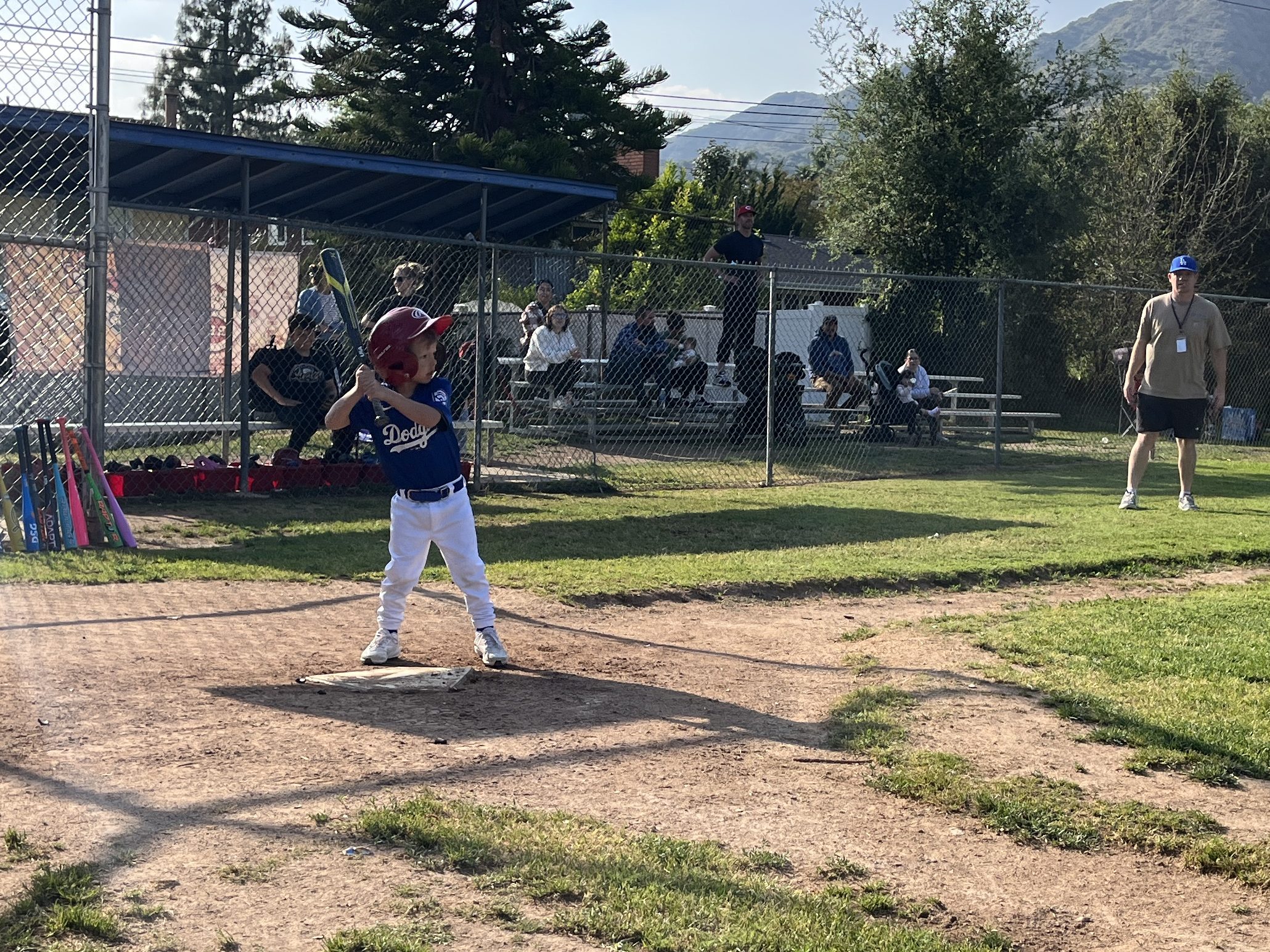
    My son is only four, but he already knows to ask me one important question:
    “Daddy, will you be at my game?”

    He never asks my wife that. Not because she loves him any less, but because he already knows she’ll be there. It’s me he’s unsure about. It’s me he’s watching.

    That question hits harder than any sales target or closing deadline.

    We live in a world that praises hustle. More income, more recognition, more everything. But here’s the quiet truth I’ve learned: the only people who will remember you worked late are the ones waiting at home.

    …the only people who will remember you worked late are the ones waiting at home.

    Your boss won’t remember you skipped bedtime stories to answer that last email. Your client won’t remember you missed the game-winning goal to squeeze in another showing. But your children? They remember.

    I’ve spent years building businesses, leading teams, coaching agents, casting vision—and all of that has meaning. But none of it matches the ache I feel when I hear my son’s little voice, wondering if I’ll show up.

    It’s easy to tell ourselves that the hard work is “for the family,” that we’re sacrificing now so they’ll have more later. But sometimes, the best gift we can give isn’t what money buys—it’s presence. It’s being there on the sidelines, in the stands, at the dinner table. It’s showing them that they matter more than the extra commission check.

    The truth is, kids don’t care how much we make; they care how much we’re with them.

    I used to think that dying for the ones you love was the ultimate sign of devotion—that to lay down your life was the greatest test of a man. But as I get older, I realize the real test isn’t whether you’d die for your family, but whether you’ll live for them—day in, day out, in the ordinary and the unseen.

    This isn’t a guilt trip. We all have seasons where we’re stretched, where work pulls us longer and harder. But maybe today, we can pause and ask: What do I want my kids to remember? The size of our house? The brand of our car? Or that I was there—really there?

    Because one day, they’ll stop asking if you’ll come. They’ll stop wondering if you’ll show up. And that’s the day you’ll wish you could go back.

    So here’s a gentle invitation for both of us:
    Let’s not miss the moments that matter most.

    The office will wait. The income can grow slowly. But the hearts of our children—they grow fast.

    And they’re waiting for us.

    “These commandments that I give you today are to be on your hearts. Impress them on your children. Talk about them when you sit at home and when you walk along the road, when you lie down and when you get up.”
    —Deuteronomy 6:6–7

  • The Altadena Prediction

    3–4 minutes

    I had worked on this article in the weeks following the fires. I had my gut-feelings, but as more and more things started coming to fruition I knew it could be time to publish. This prediction is not to be used as fact – it is exactly that, a prediction, my prediction.

    Altadena Is Burning—But What Will Rise From the Ashes?

    There are moments that divide the timeline of a town—before and after. For Altadena, this fire was that moment. Over sixty percent of its homes are gone. That’s not just lumber and drywall—that’s porch swings, photo albums, backyard BBQs, and generations of story. And now, as the smoke settles and the sirens fade, a question lingers in the air like ash: What’s next?


    0–1 Year: The Shock and the Standstill

    Insurance checks will come. But the numbers won’t match the need. Some families will hope to rebuild. Others will pack up quietly and start over somewhere else. And the ones who stay? They’ll be met with silence—empty lots, closed roads, and a stack of paperwork thicker than a phone book.

    The government, though well-meaning, will move slowly. Permits will crawl. Cleanup will stall. Infrastructure teams will be stretched thin. What was once a vibrant hillside town will feel frozen in time, paused mid-breath, waiting for someone to press “play.”


    The Next 5 Years: Scarcity and Silent Change

    While rebuilding drags, demand will quietly rise. Fewer homes mean higher prices, and the law of supply and demand doesn’t sleep. Scarcity will send values climbing, especially for the single-family homes that made it through.

    This is when the opportunists step in. Cash-heavy investors will be first, willing to wait. Later, high-income buyers will come—drawn to the view, the location, and the quiet. But with those buyers comes change. New builds won’t mirror the past. They’ll go up denser, taller, newer. And that soft-spoken charm Altadena was known for? It’ll begin to fade.


    That’s not just lumber and drywall—that’s porch swings, photo albums, backyard BBQs, and generations of story.

    5–10 Years: Developers Arrive, Charm Retreats

    Developers will roll in with polished presentations and promises of progress. They’ll pitch walkable streets and housing “for all,” but the foundation of their blueprints will be density. More units. Less yard. Bigger margins.

    The government may try to preserve affordability. They’ll hold meetings, issue statements, pass resolutions. But in the tug-of-war between nostalgia and necessity, necessity tends to win. And just like that, the character of the community will be rewritten in concrete and steel.

    Local businesses won’t all return. The ones with decades-old lease deals won’t find terms like that again. The corner café, the shoe repair shop, the bookstore—they may be replaced by brand-name coffee, luxury pet boutiques, and sleek coworking spaces.

    “Some who stayed will hold out hope. They’ll plant flowers again. Wave at a new neighbor. But as the skyline shifts… they’ll feel it in their bones—this isn’t the Altadena they fought to save.”


    10+ Years: A Whole New Altadena

    Rebuilding won’t happen overnight. Just look at Lahaina. Over a year and a half after the fires, only three homes had been rebuilt out of thousands. Altadena will face a similar wait. But while construction delays, property values will not. They’ll rise and keep rising.

    The single-family home will become a status symbol—rare, expensive, and out of reach for many. And those original residents who stayed through it all? Some may eventually decide to sell, realizing the town they waited for isn’t quite the one they get.


    The Town That Was, the Town to Come

    So, what does Altadena become? A high-priced suburb. Desirable, sure. But not the same. Not the Altadena where your neighbor shared lemons from their tree or where kids rode bikes past handmade fences. That version may not return.

    But something else will grow here. New dreams. New families. New stories. Altadena will still have a future—it just won’t look like its past.

The Optimized Entrepreneur

Optimizing Entrepreneurs so they can do more

Skip to content ↓